
Manufacturing activities in India accelerated further and touched a four-month high in April, boosted by robust new business growth, mild price pressures, better international sales, and improving supply-chain conditions, a monthly survey said on Monday. The seasonally adjusted S&P Global India Manufacturing Purchasing Managers' Index (PMI) increased from 56.4 in March to 57.2 in April, indicating the fastest improvement in the health of the sector so far this year. The March PMI data pointed to an improvement in overall operating conditions for the 22nd straight month.

Global trends, macroeconomic data, and the outcome of the US Fed policy meeting are the major factors that will drive the movement in the domestic equity markets this week, analysts said. "In the upcoming data-centric week, the focus will be on crucial releases, including inflation data from India and the US. "Indian inflation is expected to rise, while US inflation will remain steady.

India's defence sector presents an ordering opportunity worth $138 billion between fiscal years 2023-24 (FY24) and FY32, said a latest note by Nomura, which has initiated coverage on two defence-related players - Hindustan Aeronautics (HAL) and Bharat Electronics (BEL) - with a 'buy' rating. The research and broking house sees an upside potential of 28 per cent and 32 per cent, respectively in these two stocks from the current levels.

Tata Group is set to become India's first homegrown iPhone maker after Taiwan's Wistron Group agreed to sell a plant in Bengaluru to India's largest conglomerate. Wistron's board approved the sale of Wistron InfoComm Manufacturing (India) Private Ltd to Tata Electronics for $125 million, the Taiwanese electronics manufacturer said in a statement on Friday. The unit operates an iPhone assembly plant near Bengaluru.

Corporate India's net profit as a percentage of gross domestic product (GDP) dipped in the 2022-23 financial year (FY23) -- after rebounding sharply in FY22 -- amid a decline in global commodity prices. Top 500 companies' combined net profit stood at 4.1 per cent of the GDP for FY23, down from 4.3 per cent in the previous financial year when it had gone up from just 3.5 per cent in FY21. "The year-on-year (YoY) decline was led by global commodities, which contributed adversely to the ratio, while the financial sector contributed positively.

The PSU steel major has now set a target of completing the mega project--aimed at augmenting its annual production capacity to 23.46 million tonne from the present 14.6 MT-- to 2012-13 from the earlier deadline of 2011-12.

Leading online education company Educomp Solutions Ltd on Thursday said it would enter the capital markets to raise Rs 50 crore (Rs 500 million) through an initial public offer to fund its global expansion programme.

The fresh meat and seafood delivery startup Licious plans to set up 500 stores nationwide within the next five years as part of an omnichannel strategy. The aim is to attract new users in the offline channel and encourage them to transact online as well. The move would also help the company in its efforts to achieve profitability and go for an initial public offering (IPO) in the next 24 months, according to the sources.

Manufacturing activities in India eased marginally in September but remained in good shape amid companies hiring more workers and cooling price pressures, according to a monthly survey released on Monday. The seasonally adjusted S&P Global India Manufacturing Purchasing Managers' Index (PMI) indicated a strong improvement in the health of the Indian manufacturing industry, as companies stepped up production in tandem with a sustained increase in new work intakes. The PMI at 55.1 in September continued to be in expansion mode for the 15th consecutive month but was slightly lower than 56.2 recorded in August.
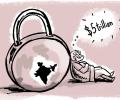
India decisively withstood global headwinds in 2023 and is likely to remain as the world's fastest-growing major economy on the back of growing demand, moderate inflation, stable interest rate regime and robust foreign exchange reserves. Despite widespread pessimism witnessed among the developed nations and the worsening geopolitical situation, India recorded a gross domestic product (GDP) expansion of 6.1 per cent in the March quarter. The growth moved up to 7.8 per cent in the June quarter and was 7.6 per cent in the September quarter. For the first six months of this fiscal, the growth was 7.7 per cent.

The increase in energy consumption was driven by renewables and natural gas, which together contributed three quarters of the expansion.

Capital expenditure by Indian companies is likely to see an uptick in the upcoming quarters as capacity utilisation has surpassed the critical threshold of 75 per cent, and numerous companies have deleveraged their balance sheets, according to analysts. The first quarter of the current financial year has shown improved profitability, driven by a decrease in input prices. This, according to analysts at Care Ratings, should stimulate a revival in the private capex cycle.

The Indian services sector activity fell to a six-month low in September, as new business inflows rose at the slowest rates since March, amid inflationary pressures and competitive conditions, a monthly survey said. The seasonally adjusted S&P Global India Services PMI Business Activity Index fell to 54.3 in September, from 57.2 in August, highlighting the weakest rate of expansion since March. For the fourteenth straight month, the services sector witnessed an expansion in output. In Purchasing Managers' Index (PMI) parlance, a print above 50 means expansion, while a score below 50 denotes contraction.
India's services sector output growth touched a three-month high in November as business inflows rose markedly amid accommodative demand conditions, a monthly survey said on Monday. The seasonally adjusted S&P Global India Services PMI Business Activity Index rose from 55.1 in October to 56.4 in November, indicating a sharp increase in output that was the quickest in three months even amid higher operating expenses. Survey participants linked the latest expansion to demand strength, successful marketing and a sustained upturn in sales.

The BSE mid-cap and small-cap stocks have outperformed the benchmark Sensex in 2023-24 with about 62 per cent returns, reflecting buoyant investors' sentiment amid robust macroeconomic conditions in the country and impressive quarterly earnings reported by various firms. As per an analysis, the BSE mid-cap gauge jumped 15,013.95 points or 62.38 per cent in the 2023-24 fiscal, while the small-cap index climbed 16,068.99 points or 59.60 per cent. In comparison, the 30-share BSE Sensex raked in a gain of 14,659.83 points or 24.85 per cent during the fiscal under review.

Billionaire Gautam Adani to two Union Ministers and Maharashtra Deputy Chief Minister Devendra Fadnavis among others on Sunday hailed India crossing $4 trillion mark though there was no official confirmation if the country has achieved the landmark. The finance ministry and the National Statistical Office did not immediately comment on the viral social media post on India's GDP crossing $4 trillion. Highly placed sources said that the viral news was incorrect and India was still shy of that landmark.

There is no impediment to normal operations as Tata Motors puts in place the demerger process of its commercial and passenger vehicles businesses. Instead, the demerger would provide greater manoeuvrability for both new entities to operate independently, according to Tata Motors management. While there may not be immediate value unlocking, it will give investors clarity about future growth and the financials across different segments.

Investors, including large corporations, view them as a potential hedge against uncertainty, and mainstream investment banks too are jumping into the game.

JSW Steel (3.37 per cent), Tata Steel (3.33 per cent), Maruti (3.24 per cent), Power Grid (3.07 per cent), IndusInd Bank (2.95 per cent), Bajaj Finance (2.12 per cent) and Tech Mahindra (2.22 per cent) were among major gainers. On the other hand, Ultratech Cement, Sun Pharma, Nestle and L&T were the losers.

Despite multiple headwinds at the start of 2023, the Indian markets delivered a strong performance, posting 19-20 per cent growth for the year. Even as new records were set, investor sentiment remains strong going into 2024, given the lower inflation, expectations of steady to lower interest rates, higher economic growth, and strong inflows. However, the overriding concern for most brokerages is valuations.
Expansion of defence and trade ties, cooperation in new areas and combating common global threats with enhanced mutual partnership will be the key priorities for United States Ambassador-designate to India Nancy Powell. In a video message, the 64-year-old career diplomat, who will arrive in New Delhi later this week, said she shared President Barack Obama's vision of India and America forming one of the "definitive partnerships" of 21st century.

Discount retailer DMart (Avenue Supermarts) hit its highest levels in a year and a half last week and is up over 11 per cent in the last one month. The company depends on low operating costs to offer the lowest prices to consumers, which enables sales velocity and scale, further reducing costs. This virtuous feedback loop has helped DMart gain market share in a sector dominated by unorganised stores.

The Indian economy is projected to grow at 6.3 per cent in current financial year aided by investment and domestic demand. According to a World Bank report released on Tuesday, India continues to show resilience against the backdrop of a challenging global environment. In India, which accounts for the bulk of South Asia region, growth is expected to remain robust at 6.3 per cent in 2023-24, India Development Update of the World Bank said.

United States President Joe Biden will travel to India from September 7 to 10 to attend the G-20 Leaders' Summit during which he will discuss with other leaders a range of global challenges, including the Ukraine conflict, the White House announced on Tuesday.

India's manufacturing sector activity rose to a 13-month high in December, supported by healthy inflows of new business and strong demand conditions, according to a monthly survey. The seasonally adjusted S&P Global India Manufacturing Purchasing Managers' Index (PMI) stood at 57.8 in December, up from 55.7 in November, as business conditions improved to the greatest extent in over two years. The December PMI data pointed to an improvement in overall operating conditions for the 18th straight month.

Growing concerns over slower-than-expected margin recovery, amid weak deposit growth have caught HDFC Bank's investors off guard. HDFC Bank's stock on Wednesday plunged nearly 9 per cent to hit an intraday low of Rs 1,527 on the BSE after reporting weaker-than-expected earnings in the third quarter (October - December) of the current financial year (Q3FY24). The shares of India's biggest private lender closed at Rs 1,536.9, down 8.46 per cent.

'There's no pro-China tilt in BRICS.' 'All these countries want to be close to China, but they are all good friends of India also.'

The National Science Foundationis an independent agency of the United States government that supports fundamental research and education in all the non-medical fields of science and engineering. Its medical counterpart is the National Institutes of Health.

The hospitality industry has seen plenty of interest since the catastrophic impact of the pandemic, which led to losses in FY21. The hotel industry market cap has more than tripled since 2019 on the combination of a strong earnings rebound and positive surprises, as well as three recent listings. The industry has good tailwinds. The anticipation is, demand for rooms will outrun supply for a few years despite capacity expansions.

General sentiment that slowdown and dip in investor sentiment won't affect rationale for expansion

IT firm HCL Technologies on Thursday opened a new Global Delivery Centre in Redmond, Washington, where the company will initially invest $4 million (about Rs 19 crore), leading to the creation of 400 jobs over the next two years.

Corporate margins and profits in India remain vulnerable to changes in crude oil prices in the international market. Historical quarterly data from listed companies (excluding banks, finance and insurance, oil and gas, and power sectors) indicate an adverse correlation between corporate margins and crude oil prices.
The group also has plans to spend Rs 50,000 crore (Rs 500 billion) on power generation. The London-listed giant will spend Rs 43,000 crore (Rs 430 billion) to enhance its capacity, in addition to its Rs 50,000-crore (Rs 500-billion) plan in power generation.

India's economy grew 6.1 per cent in the fourth quarter of 2022-23, pushing up the annual growth rate to 7.2 per cent, official data showed on Wednesday.

The prime minister also welcomed convergence of views between India and ASEAN for cooperation in the Indo-Pacific region.

Moody's Investors Service on Friday raised India's growth projection for 2023 calendar year to 6.7 per cent on account of robust economic momentum. "Strong services expansion and capital expenditures propelled India's 7.8 per cent real GDP growth in the second (April-June) quarter from a year ago. "We have accordingly raised our 2023 calendar year growth forecast for India from 5.5 per cent to 6.7 per cent," Moody's said in its Global Macro Outlook. - el nino
The Chinese government must work towards policies that lead to higher spending by Chinese consumers.


The stock of the country's largest passenger vehicle maker, Maruti Suzuki India (MSIL), has been hitting successive all-time highs over the past three trading sessions. The rally in the scrip has helped it notch over a 21 per cent gain since the start of February, outperforming the National Stock Exchange Nifty Auto Index. The gains for the leader of small passenger cars have been more recent, as the company still trails the Nifty Auto over one- and two-year periods.

Operating margins have been the primary driver of corporate earnings in India in recent quarters, despite revenue growth suffering from weak consumer demand. Companies across sectors have reported a sharp improvement in earnings before interest, tax, depreciation, and amortisation (Ebitda) margins over the past two years, benefiting from lower commodity and energy prices. Higher margins more than compensated for slower revenue growth, resulting in double-digit growth in net profit for five consecutive quarters.
